Read our news about what is going on at Industridoktorn at the moment here!
Industridoktorn expands with a Technology Center
Spring 2026
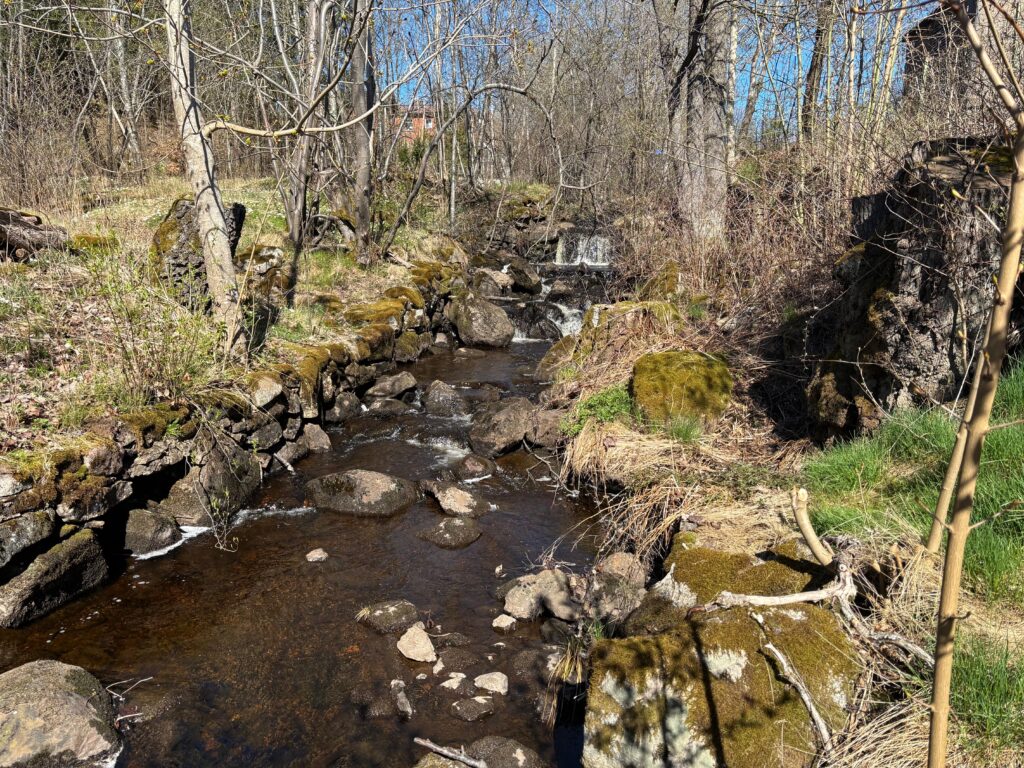
Our lab on Björkö has been complemented by a technology center at a branch in Borås. After being set up during 2025, the operation is now up and running. The premises will, in addition to providing a physical presence in the Sjuhärad region, create new opportunities for tailored solutions in chemical problem-solving and innovation. The expansion strengthens both our own innovation efforts and our offering to partners, ranging from innovative startups to large corporations, particularly in areas such as technical verification and R&D.
It is a robust building, originally a fire station, complete with its own stream. The visiting address is Alingsåsvägen 3, 518 42 Sjömarken.
Increased capacity for non-target screening
Autumn 2025
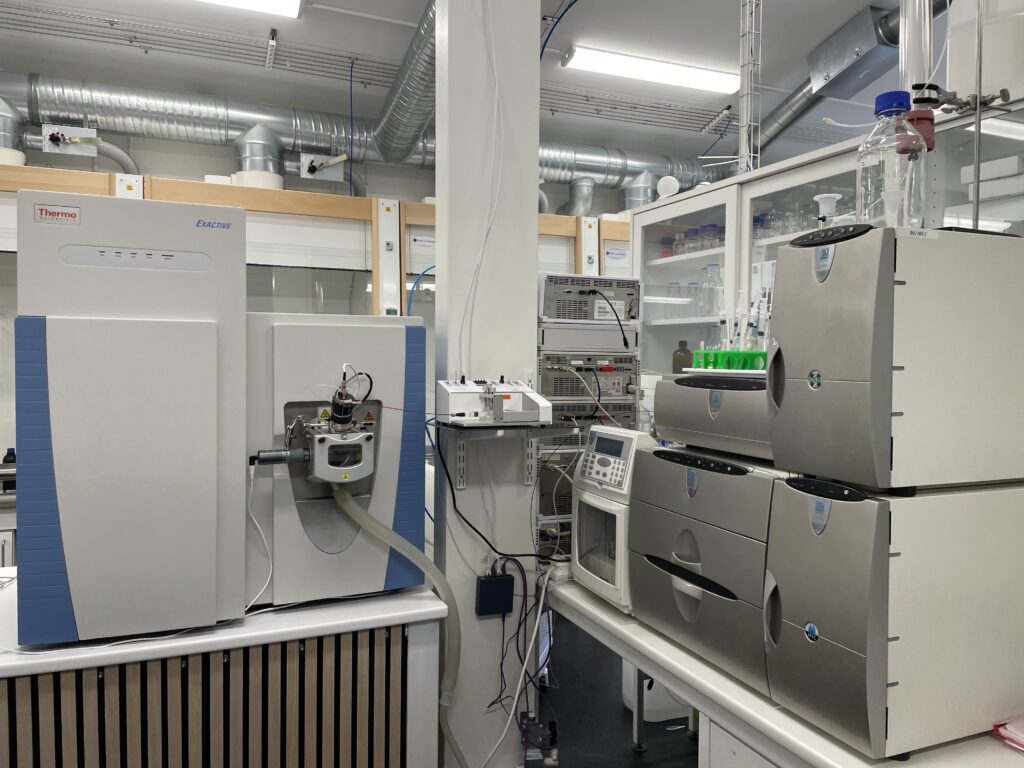
Now we can offer non-target screening at a whole new level! During 2025, we significantly expanded our ability to solve chemical problems without prior assumptions about which compounds we are looking for—so-called non-target screening. We can also perform this over time directly in the environment to ensure workplace safety or improve processes in industrial settings.
Our mass spectrometry system for volatile compounds (ATD-GC-MS) has been complemented with three additional types of mass spectrometry techniques, which can flexibly use different separation methods prior to detection. We now have:
- Selectable separation techniques upstream of the mass spectrometers (HPLC/IC/ATD)
- Triple quadrupole MS for quantification
- High-resolution Orbitrap MS for precise identification
- IMS coupled to our sniffing robot for field measurements
We have stacked the mass spectrometers vertically to minimize dead volumes and to efficiently integrate the different separation techniques. To support this, we have also designed and built our own energy-efficient nitrogen generation for MS operation, installed a new nitrogen gas distribution system in the lab, and constructed mobile (so-called dollies) mass spectrometry benches with sound insulation.
Our new capability, “non-target surveillance,” is carried out using our robust sniffing robot, which both secures samples and performs rapid IMS measurements – a robot capable of tracing compounds back to their source!
Air surveillance of the future
June 2025
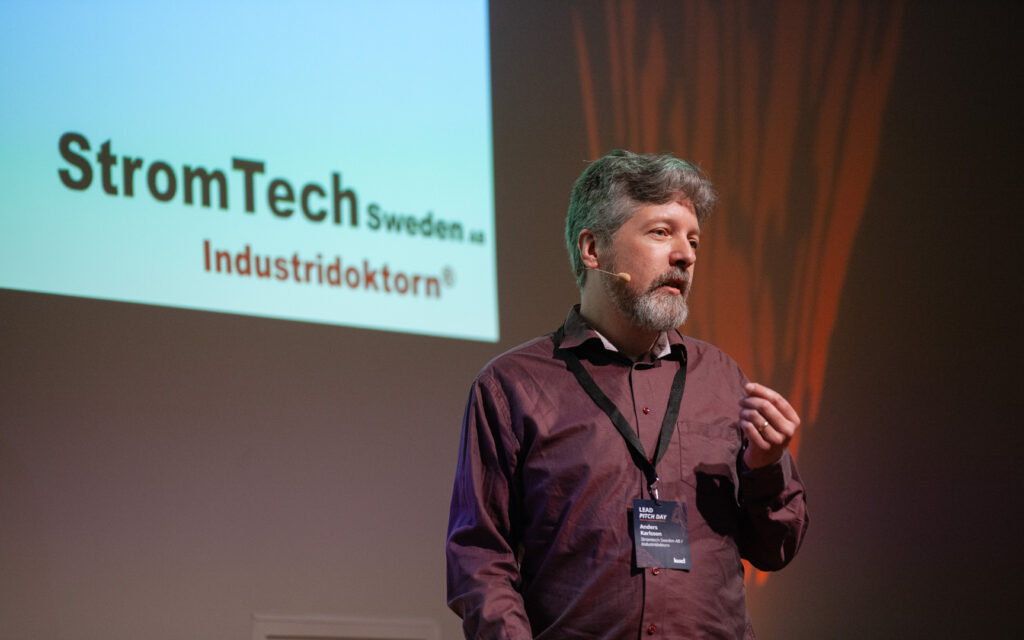
Photo: Christine Engström
On June 4, around 150 defense stakeholders gathered at the Air Force Museum in Linköping to gain insights into, among other things, the future of air surveillance. During the event, Anders Karlsson and Susanne Ekendahl presented the latest sniffing robot – a self-sufficient, cloud-connected unit that monitors, analyzes, and stores airborne substances in real time. In other words, the robot identifies what is in the air and whether it is hazardous, and can also trace the source of the odor.
Despite its advanced technology, the system is easy to use: it is literally a black case with a single button – ready to be deployed in under five seconds. “Unfold the panels and press the button” is the only instruction needed; after that, it operates independently. It is lightweight and portable, but can also be flexibly deployed on various types of drones (ground, water, air).
We have already used the robot in several industrial projects with unique results. It has also been exclusively demonstrated to FOI, the Swedish Armed Forces (CBRN defense), and FMV, but the event – organized by LEAD – marked the first public demonstration of the sniffing robot.
The sniffing robot is one of 15 high-tech innovations with dual-use applications that have received support from Vinnova and the Swedish Armed Forces through the civil-military program. It has been particularly exciting to gain insight into several of the other companies’ impressive technologies. The defense sector has shown strong interest in our technology even after the program concluded.
Would you like to see the sniffing robot in action? Contact us at Industridoktorn or book a project directly – for example, to trace an emission. This technology is not only “dual use,” it is also “ready to use.”
Gas Sniffer Robot Gaston is further developed for the Defense
November 2024

Elefants have one of the most developed senses of smell in the animal kingdom and can identify scents from several kilometers away. They can detect chemical compounds like TNT in mines even at very low concentrations and avoid this scent. Upon detection, they simply choose to change direction and walk another path. The elephant´s remarkable ability has inspired our scent robots, whose purpose is to safely solve human problems in complex environments.
Our new project, “Robotic Olfactometry for Security and Defense Applications”, aims to expand the ability to detect relevant substances such as explosives and toxins in the air for the defense sector. A new type of detection principle is being incorporated into our civilian gas and air robot, Gaston, launched in 2024 for industrial emissions. The air monitoring technology can be described as a kind of cloud-based “sense-of-smell” that collects data via chemical monitoring robots, placed in various locations, to generate real-time scent maps for tracking and detecting threats.
The project is funded by Sweden´s Innovation Agency and the Swedish Armed Forces within the Civil-Military Innovation Program and will run for 9 months until the summer of 2025. The project includes participation in an accelerator program similar to NATO´s innovation accelerator, Diana.
Monthly robot progress
June 2024
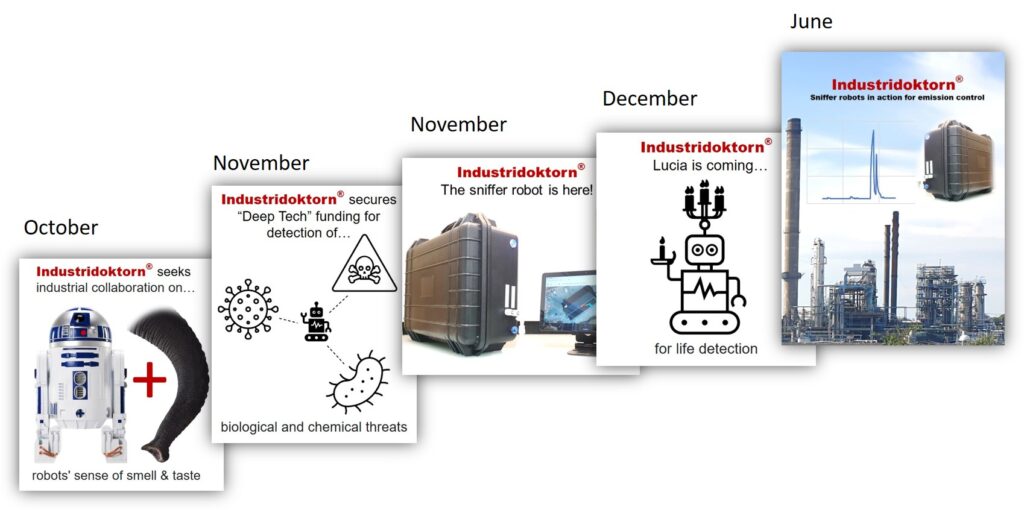
When things got ready faster than planned. I recently prepared a presentation for a client where I shared the latest LinkedIn posts about our bot development (image). Looking back, the timeline seemed unrealistic. If this had been a plan with deliverables in a research proposal, we would have said, “No way.”
Consider the development of our sniffer robot, Gaston. We posted in October seeking industrial cooperation, in November announcing the robot’s launch, and in June about its´ use in several emission monitoring services for a large European industry. This rapid progression might seem unbelievable, but careful planning was crucial—though not specifically for Gaston. Much of Gaston’s development relied on another bot that took five years to create, a process involving meticulous planning. Moreover, Gaston had been planned for more than five years, but we never found the time to build it.
The reason for the speedy development was need and modularity. Various functions such as programming, encryption, data storage, and fluidics can be reused and modified for new builds. So, Gaston was built in response to an urgent request, starting construction based on previous builds.
The key takeaway is that responding to immediate needs and practical realities is more important than detailed planning that can go on for years. Need is the best force for getting things done!
Sniffer Robots Survey Industrial Emissions
June 2024
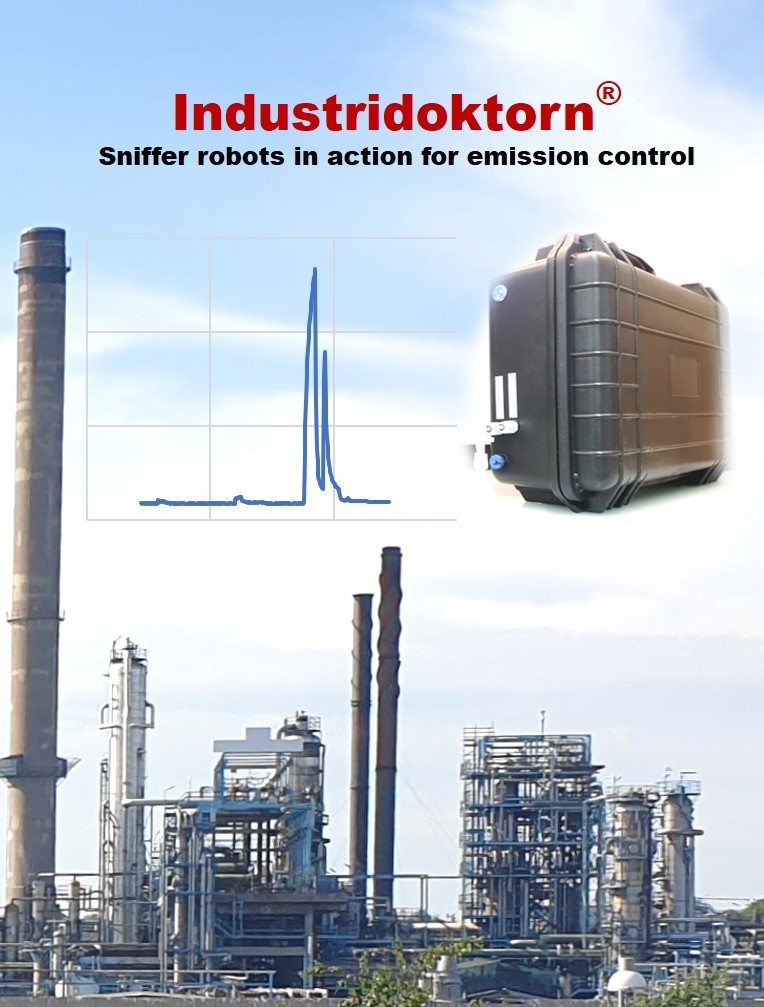
Our unique scent-sniffing robot, Gaston, has proven to be a game changer for monitoring volatile pollutants over time. Gaston was recently commissioned to determine the total emissive load from a large industry in Europe. The industry’s management is planning a significant expansion of production and needed comprehensive data on current emissions across all production steps.
Over two weeks, Gaston tracked hundreds of compounds in the emissions, covering all processing steps in the factory. This raised several key questions:
- Which steps caused increased emissions?
- What is the emissive load of the regulated chemical components?
- What is the total emissive load of the VOCs (volatile organic compounds)?
- How large is the peak emission?
- What is the background emission?
- What is the peak duration?
The sniffer robot provided answers to all these questions.
Compared to most of today’s practices for emission control and legislative demands, such as the VOC directive, the data from the sniffer robot is substantial. It collected 70,000 measurements per sensor, with a measurement taken every 20 seconds. This technology, available today, aligns with future demands.
Learn more about our environmental surveillance robots in service and under development (partly funded by Vinnova Deep Tech programs), which offer a completely new level of sensing. Let’s make the industry much less emissive for present and future generations! https://industridoktorn.se/en/robots/
The gas-sniffing robot Gaston is ready for take-off!
Spring 2024
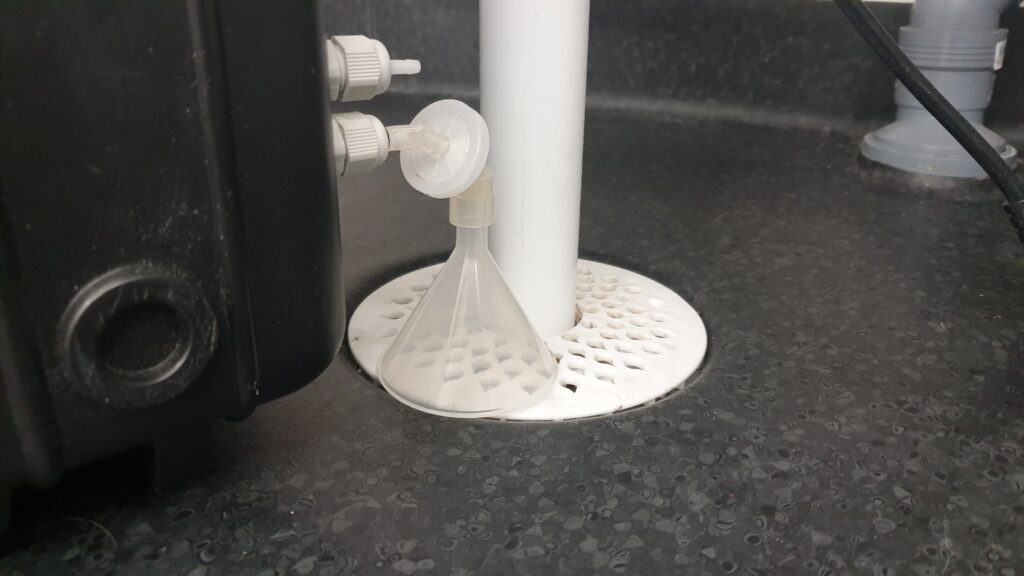
Gaston, our new scent-sniffing robot is now ready for hard work at industry and in the enviroment!
It uses GPS, sensors and fluidics to track scents. Gaston can even prepare the sniffed gas for better detection and store samples for later lab analysis. To map scents, just take Gaston for a walk or put it on a ROV and follow the build-up of the response map in the cloud. Leave it in one place for a month to monitor emissions over time, determine total emissive loads, find out that exposure limits are not exceeded and store scents automatically.
Read more about Gaston and its´ functions here.
New patent published – algae replace microplastics in paint
November 2023
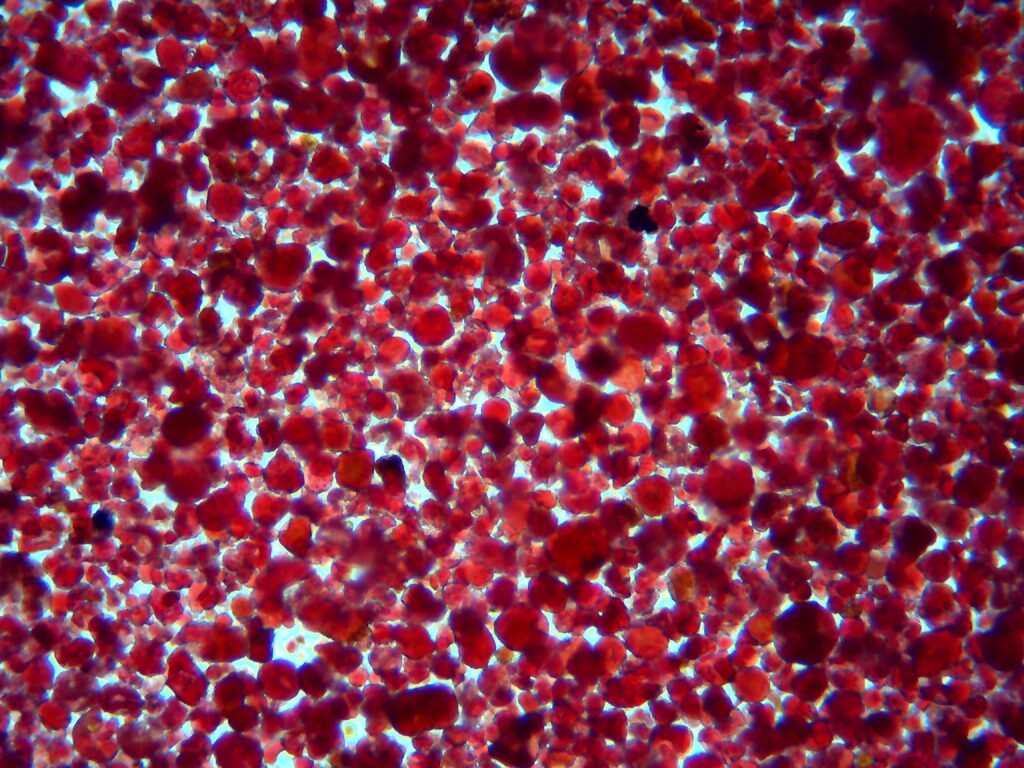
Microscopic plastic particles are often used as binder agents in paint and this source of microplastics is often forgotten. In November a new patent was granted and published. The patent means that spherical algae can replace microplastics in paint formulations. The algae have properties that make them functional as binders. It is also possible to replace the often green pigment in the algal cells to another pigment, like for example the picture above shows, where green Chlorella-algae have got a red colour. This gives many possibilities for different colour shades, where microplastics is replaced with a completely natural material and where the surface chemistry and durability of spherical algae is utilized. The patent is owned by Mounid AB. Inventors are the Industridoktorn researchers Niklas Strömberg and Susanne Ekendahl together with the owner of Mounid, Ida Näslund. This is a typical example of how the researchers at Industridoktorn work with patent.
Prototype Göteborg
Summer 2023
Göteborg has celebrated 400 years as a city from the 2nd of June to the 3rd of September 2023. The celebration was arranged by Göteborg Stad with project leadership from Göteborg & Co. During the festivities we have shown our prototype with cultivation of microalgae. The algae has grown well during summer and a sediment has been formed! The prototype has now been moved to our own laboratory for continued demonstration.
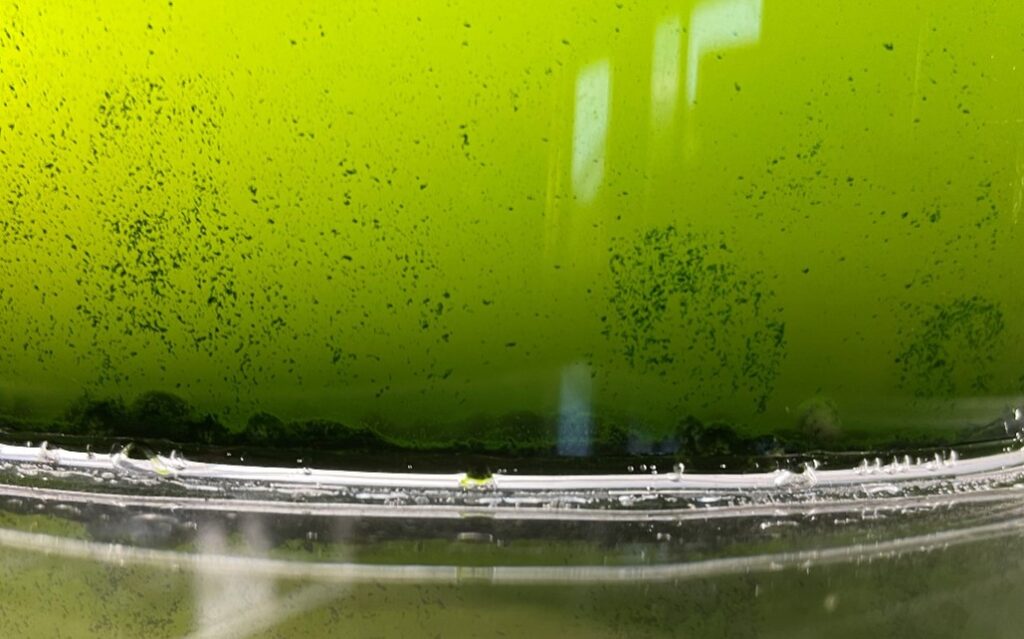
Micro algae
Micro algae are micrometer-sized organisms that you cannot see one by one with the naked eye. Many together can be seen as a green or brownish colour in the water (if free floating they are called phyco plankton) or on different surfaces like for instance walls on buildings. They live using sunlight, water, carbon dioxide from the air and minerals that they convert via photosynthesis into biomass and oxygen. They are more efficient than plants (algae are not actual plants) in producing much biomass per area and produces about half of the oxygen on earth!
The fossil oil that we use originates mainly from microalgae. When the oil is incinerated, for example as diesel or gasoline, the carbon dioxide fixed by the microalgae for up to 1 million years ago is released into the atmosphere again and gives rise to the greenhouse effect. Except using the algae as a means to re-capture carbon dioxide from the air or industrial emissions, the tiny cells can be cultivated at large scale and provide food, feed, medical drugs, plastics, paint and lots more. Micro algae are fantastic!
The prototype
The prototype by Industridoktorn demonstrates the processes with both growth of algae and sedimentation in the water column. In the high tube a green micro alga called Chlorella vulgaris is growing, a species that is easy to cultivate and is also grown globally at commercial scale. The nutrients that the algae grow on consists of ordinary garden fertilizer that contains nitrogen, phosphorous and trace elements. The lamp provides light energy and the bubbling of air provides both carbon dioxide for growth and some mixing in the upper layer. In the lower layer the mixing is intentionally low to simulate the bottom of a lake or the sea. As time goes on the cells grow in numbers and the weight of the biomass increases and the cells slowly sink to the bottom and form a sediment, that keeps growing thicker with time.
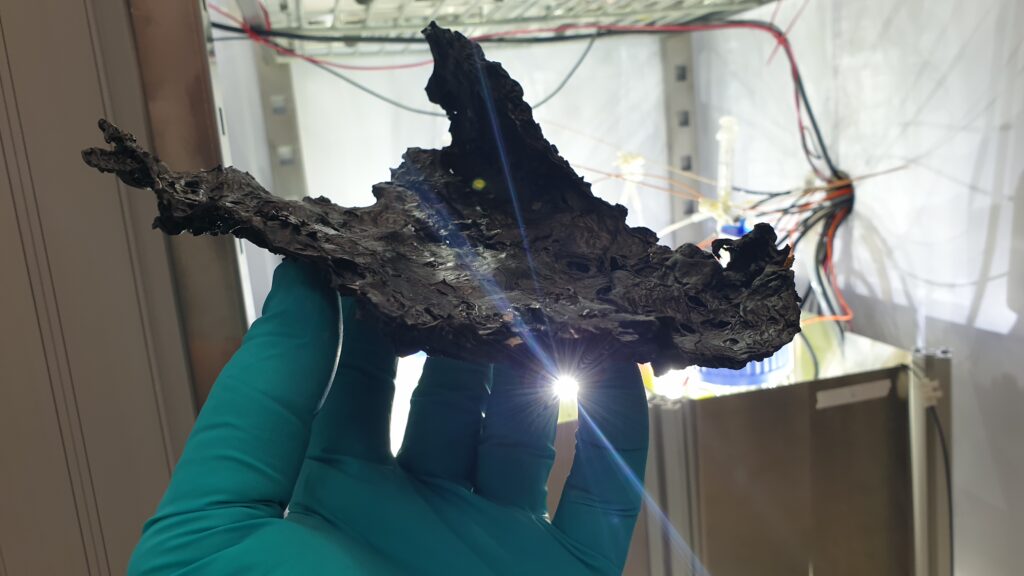
At pilot scale we have cultivated microalgae at industrial sites (paper mill, lead smelter) with flue gas as carbon dioxide source and sunlight. Then the biomass is harvested once a year in an energy efficient process. When the sediment thereafter is dried a blackgreen cake is formed, consisting of carbohydrates, proteins, and lipids (fat), which is rich in energy. The cake can give you a picture of how sedimented biomass, in nature preserved under high pressure during a long time without being completely degraded on the sea floor, is transformed into fossil oil.
Projects described on the page “Research and projects” show examples of practical applications of using algae and cyanobacteria. https://industridoktorn.se/en/research-public-funding-2/
The research laboratory driven by the sun!
May 2023
Not just the Industridoktorn laboratory but the whole property with workshop, gym and offices are now solar driven.
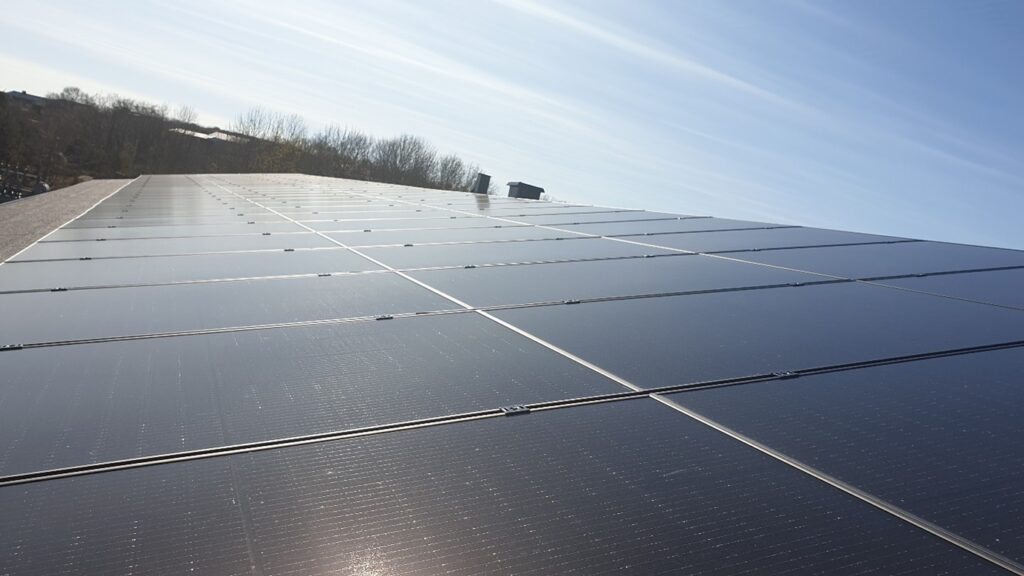
At Industridoktorn we have built one of the most energy efficient laboratories there is, with a fan system that only utilizes energy equivalent to a small microwave oven of 800 W. However, energy savings is one thing and what type of energy source is another. Therefore the lab has got solar panels for as much as 31 kW installed on the roof facing south. This corresponds to the operation of 38 microwave ovens. Our new favorite unit is SMWE, meaning “small microwave equivalent”!
The energy from the sun is estimated to cover about 80% of the yearly energy consumption by the property and also supplies electricity for two car charging points. It is fantastic that our property owners Sörgårdskile AB invest like this …but of course, the sun always shines at Björkö!
Industridoktorn – the only sun driven laboratory in Sweden?
The Industridoktorn laboratory now approved for protection level 2
April 2023
Recently we were inspected by The Swedish Work Environment Authority (with excellent results). They looked at our clean room for handling of microorganisms plus documentation and work procedures, but what does risk classification and protection levels really mean?
Infectious agents are classified into four risk groups based on their ability to infect humans and cause disease. The handling of microbes in risk groups 2-4 are notifiable and regulated by the Swedish Work Environment Authority.
Risk group 1 includes microorganisms that are not infectious and working with them does not need to be notified and has no special handling demands. Risk group 2 includes infectious agents that can infect people but that do not cause permanent illness, or the disease can be cured of efficiently prevented. The most dangerous infectious diseases belongs to risk groups 3 and 4. The nowadays familiar Sars Cov-2 belongs to risk group 3 and Ebola belongs to risk group 4.
For natural reasons, corresponding demands are put on the protection levels at the laboratories. Labs with protection levels 2 and 3 are relatively common, but at protection level 4 there is only one approved lab in the Nordic countries qualified for this. We are talking about a separate fully isolated building, “space suits”, air locks and lots of ethanol (interesting combination…).
Pressure testing and control of our Hepa air filters were recently approved so that we for real can start our microbiological work. It means that we for instance can verify that our new surveillance robots measure viruses and bacteria correctly.